Sunday, January 20, 2013

Sarah Polk

Sarah Polk grew up in a wealthy household in Tennessee. At the age of 15, Sarah and her sister were sent to a Moravian school in which Sarah and her sister were taught the strict morals and piety of the Moravian church. Her religious upbringing impacted her greatly, but I don’t believe she became a born again Christian until later in life.

On a journey to Washington DC in 1833, when James Polk was in the House of Representatives, James and Sarah stopped for the night when a meteor shower occurred. Sarah was wide awake watching the display in the sky and she was terrified for her life. She was sure the end of the world was imminent!


a meteor shower


The very next year, 1834, she joined the First Presbyterian Church on 4-and-a Half Street in Washington DC and from then on she conducted herself with confidence in regards to all manner of her life whether it be for this world or the next. Although I haven’t found a biographer to make mention of her experience of being saved, I believe Sarah Polk truly was. What else would change a woman from cowering in fear for the end of the world to a confidently pious woman other than forgiveness from Jesus Christ?

Every Sunday morning she would put on her shawl and bonnet, ready for church, and ask her husband and whatever friends he had visiting to come with her to church. (Eventually, political friends stopped their Sunday visits or left before she could ask them to go.) Sarah banned hard liquor, dancing, and card playing in the White House. Dancing “would be respectful neither to the house or the office.” She would not attend horse races or be escorted by men other than her husband. When she was traveling by boat on a Sunday she asked that no music be played.  She was frugal with her money allotted to her to fix up the White House and for entertaining (much to Julia Tyler’s frustration!)

Sarah was also a partner with James in the political world. Sarah would much rather sit and talk politics with the men than retire with the women to the parlor. Sarah read the newspapers for her husband and marked the articles necessary for him to read. James did not consult with his cabinet often since he consulted with Sarah so much. They had no children which freed up Sarah’s time to be involved. She also let the kitchen and the other staff in the White House be in charge of the entertaining. She did not bother to instruct them but let them do their thing.

James promised to be a one term president and he stuck to his word. He died only three months after the end of his presidency at his home in Nashville. Sarah had him buried in a monument of a tomb in the yard. Sarah lived for 42 years longer than James.


James Polk's grave


I would love to tell you that Sarah did wonderful things with her long widowhood, but, frankly, her life was dull after James died. She did raise her niece and when her niece married they continued to live with Sarah. But when I say she raised her niece, the niece lived in the home and Sarah paid for a nurse to care for her, and for her schooling. Sarah did attend church and faithfully read her Bible, but didn’t do much else.

Literally half of the biography I read, Memorials of Sarah Childress Polk by Anson Nelson and Fanny Nelson, were about the latter half of her life and was entirely things like, “a group of young school boys visited and Sarah talked to them about her time in Washington…” and “once she received a letter from such and such a wealthy man praising Sarah for her high morals and lovely character” and “she gave a fancy watch she had to the daughter of a General she admired.”


Sarah Childress Polk

She remained publicly neutral during the Civil War, entertaining officers from the North and the South when they passed through Nashville. Sarah’s land in Mississippi was destroyed during the war including her cotton and she lost all her slaves, but it did not totally devastate Sarah like Julia Tyler was financially devastated. Perhaps because Sarah made a habit of always spending less than she earned and also had far less people to support than Julia did.

Sarah Polk died in 1891 and this biography was written in 1892 so the biographer lacked opportunity to see how Sarah Polk was treated or remembered in history. But on the other hand, her death came 42 years after her time in the White House and what she did in the White House was all Sarah ever did publicly.  I wonder if a biography written today would look any different.

I guess I would sum up Sarah Polk as admirable in character and her love for the Lord, but I was hoping there was more she would have done in her retirement years. She seems so boring after the dramatic and flirtatious Julia Tyler. (Although it was "good-boring" since we are talking about real life here!) She had a little of Abigail Adams about her, with her intense interest in politics, but she lacked Abigail’s big mouth. She was like Dolley Madison in that she was free from raising children which enabled her to put her whole self into her husband’s politics. But part of the beauty of studying the first ladies is seeing how each first lady is different in themselves and different in their executing of the role for both their time in the White House and the time out of it.


Monday, December 10, 2012

Julia Tyler

I can't believe I read the whole thing! And Tyler Too: A Biography of John and Julia Tyler by Robert Seager II was 550 pages, 12 point font, single spaced, with lots of politics to follow. Before reading the First Ladies I considered a 200 page book to be long, so this is a big accomplishment for me.


Also new to me was enjoying reading about the Civil War. I've never been much interested in battlefield history which is all I have come across so far, but each member of the family was heavily affected by the war so it gave so much personal interest. John Tyler was president of the peace conference in early 1860 at the end of James Buchanan's presidency to try to avoid war. But once John Tyler talked to Abe Lincoln in secret several weeks before his inauguration, John knew peace was hopeless and began planning Virginia's cessation. He even was elected to the Confederate congress. However, John passed away before the war was over. Later, his son Gardie would say John was lucky that he did not have to try to live in post-war South. Gardie fought in the war as a teenager and never gave up hoping that the South could try again to conquer the Yankees.

Julia was greatly affected by the war personally and financially. She fled the south to take her younger children to safety with her mother on Staten Island. (The two older boys stayed in school in the south.) This escalated the friction in the crowded house since Julia's brother David was also living there. David was a die hard Yankee and political discussions were heated- so heated that David once knocked Julia to the floor! After that Julia's mother ordered David and his wife out. They never made peace in their lifetime. After their mother died, David contested the will which had left much to Julia and they went to court after court to sort it out.

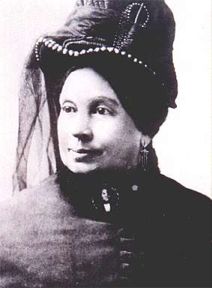
Julia Tyler


Financially the war ruined Julia. Her vacation home, Villa Margaret, was occupied by the Union soldiers who turned it over to the American Missionary Society who used the property for a "Negro school" complete with little shacks for houses all over the grounds. After the war, Julia wrote letter after letter and went to different courts to sort out who had the authority to kick the missionaries out and give her her property back. When she finally got possession of the property back, it was so ruined that she didn't even want it anymore. She tried to sell it to the government but that did not work. She ended up selling it privately for less than a third than it was worth before the war.

Sherwood Forest, her plantation, was also ruined by former slaves who came into the property and smashed and broke everything then lived in it until Julia's teenage son came and took it over to attempt to farm it with a couple of farm hands he could find for hire. But working men were scarce and supplies were expensive. And the son was only 16 when Julia left Sherwood Forest in his care! Julia tried to sell it but there were no buyers. The children were glad that their home was still theirs reminding them of happier times.


Sherwood Forest Plantation

In all honesty, the Tylers, like other Virginia plantation presidents before them, did not have financial problems solely because of the war. It was solely because they did not "act their wage." They had the appearance of wealth, but mostly just had debt. Instead of saving money, John would "play the lottery" with land speculations in Kentucky and California.  Julia loved to throw huge parties and she loved shopping for clothing. John would not tell her no. She just bought what she wanted and he borrowed from one bank to pay the other bank. Like when their vacation was coming up she went out and spent $500 on new dresses! Even after the war when her properties and plantations were ruined she was sending her sons about 20 cents a week spending money during college which did not curb their spending, but caused them to rack up debt. At the same time, she went and spent $700 on clothing and shoes for herself! Even today that is an outrageous amount for clothing. So, do I feel bad for her that her properties were ruined? Yes. But at the same time, she never really did handle money properly and she lived the consequences of that her whole life.

Julia was only first lady for one social season, 1844-1845, but it was a glorious one! The author says it was not matched until over a hundred years later. For her grandest party, she had her sister, Margaret, hand write over 2,000 invitations! Since Congress was still not giving John Tyler any stipend for White House expenses all was paid for by the Gardiner family.

Julia actually referred to her time as first lady as her "reign." Not in jest, but she actually called it that. She had taken a European tour before she was married which obviously influenced her view of the rulers of a nation. Julia even had a court composed of her sister, some cousins and friends. At balls she would arrive fashionably late, seat herself in a comfortable chair, and have her ladies stand around her.  But her court was a sensation with the men in Washington and they enjoyed flirting and dancing with them. Julia was a huge flirt and had several offers of marriage in Washington before falling in love with John Tyler.

Those were her glory days and she loved to relive them. Even in her last years, she took an apartment in Washington and enjoyed the attentions from the newspapers and those who remembered her "reign."

Reverend Father Patrick F. Healy, S.J. guided Julia in investigating the Catholic Church. He was later president of Georgetown College.


Also unusual about Julia was that she converted to the Roman Catholic church at age 52. When the war was over she was trying to decide where to send her children to school. Schools in the south were closed and she certainly wouldn't send them in Yankee territory! Her two older sons went to Germany, but her oldest daughter went to a convent in Nova Scotia and had such a wonderful experience. In all the tumult of Julia's life, she investigated the Roman Catholic church and was drawn to its stability and order. Makes sense since her whole life had been turned upside down by the war and financial uncertainty. It also gave peace to her soul as she grieved so many who were close to her including her beloved daughter, Julie, who died in childbirth at 21. At first, she sent Roman Catholic literature to all her family and friends and tried to convert them all, but ultimately she let them be and was content with her faith. The next president or wife to be Roman Catholic would be JFK.


Friday, November 2, 2012

In the Footsteps of Priscilla Cooper Tyler

The author of Priscilla Cooper Tyler's biography had included the exact addresses in Bristol, PA of where Priscilla had grown up and also where she lived with her husband and children after she was White House hostess. Since Bristol is only a little over an hour away, my mother and I decided to visit the places mentioned. Thankfully, we just happened to pick Historic Bristol Day to visit so a lot more was open in the town than what would have been had we picked any other day of the year!

First we came upon St. James Episcopal Church where Priscilla and her family attended. The congregation itself was was founded in 1712, but the building we visited was erected in 1857. Priscilla and her husband Robert Tyler attended the church at the time.

The front door of the Episcopal Church. The church is still used for worship today.

Inside the front door is the baptismal font used when the church first opened. The biography said that Priscilla's baby, Robert Tyler, Jr, was the first baptized in this church. However, a local historian we met that day said Robert Jr was actually the fourth baby baptized. Either way, it was in this font. I could just picture Priscilla holding her little baby on his special day right in this very church!


I knew Priscilla's father, Thomas Cooper, was buried somewhere in the vast cemetary. We set out to search for his stone and found it in the first row we walked down! The stone was not readable, but there was a little green flag set out to mark the stone because it was Bristol Day. Thomas Cooper was America's first prominent Shakespearean actor and the first idol of American theater. He died in 1849. His wife, Mary Fairlie, is buried in the same plot but there is no headstone. Also in 1849, Priscilla and Robert's two year old son died. He is buried in the same plot according to the biography, so the rector looked in her old cemetary records for us, but there was no mention of the baby's burial.

Next we went to 610 Radcliffe St which is the house that Priscilla and Robert rented from Captain Hutchinson when they lived in Bristol sometime after leaving the White House until 1861 when they were forced to flee a lynchmob who was after Robert Tyler. At the time he was a prominent state politician and was also vocal that he was in favor of state's rights.


 When the Tylers rented the home, it was a simple Federal style home. Now it is the Margaret R. Grundy Memorial Museum and is elaborately set in the Victorian manner and greatly expanded. This picture is the back of the home which faces the Delaware River. 


Here I am standing in front of what was 722 Radcliffe St. which was where Priscilla grew up. Legend has it that Thomas Cooper won the property and the little cottage that stood on it while gambling at cards in Paris.


When the Cooper family out grew the little cottage at 722 Radcliffe St., Thomas Cooper bought this property next door and built this "white house" to house the children and the governess while Thomas and Mary remained in the cottage.


 This huge tree must have been in the yard when Priscilla was a girl. I could picture her swinging on a swing there or just playing in its shade on a hot day.


 This has nothing to do with Priscilla, but it is a stone trough that is engraved on the front with "Free drink" and on the end with "1874." I have never seen anything like it before.

Thursday, October 4, 2012

"A Northern Bride with Southern Principles"

John Tyler has made me work twice as hard. In his short time as president (1841-1845), he had two wives. Not only that, but the biography of his second wife, And Tyler, Too: a Biography of John and Julia Gardiner Tyler by Robert Seager, II, is 550 pages long, 12 point type, single space. Not exactly a quick read. However, to my great relief, it is wonderfully written and easy to read. There is far too much information for one blog post, so for Julia Tyler, I will jot down my thoughts in several posts.


Four months after his first wife passed away, John started to court Julia Gardiner who was 30 years his junior. They were married the next year, April 1844, in a near-elopement style wedding making John Tyler the first president to marry while in office. There were many eyebrows raised because of the age difference. John Tyler had children older than his new bride! But there is nothing surviving in any of their correspondence to indicate that they had any issues or hesitations based on the age difference. They were very affectionate and loving to each other and went on to have seven children.

After their wedding ceremony in New York near her parent's home, John and Julia went on a wedding trip with many stops including his new home Sherwood Forest in Virginia. The author describes the occassion of Julia's first meeting with her newly acquired 60 plus slaves on the plantation. I thought to myself, what was running through her mind as she, a Northern born wealthy woman, was meeting her slaves for the first time? Was this awkward for her? Did she detest slavery and just do what she had to do because she married a southern plantation owner? Or, being from a very wealthy family, was she used to someone else doing the work and what did it matter if they were called slaves or servants?

An old duplex slave cabin on Sherwood Forest Plantation

The author must have read my mind. He answered that very question in the next chapter of the book which describes the Gardiner family. Lion Gardiner came to America in 1635 with the Connecticut Company to protect the settlement from Indians, first by killing them and then Lion sought another way by seeking to understand and communicate with them. For ten pieces of cloth he purchased Manchonake Island off the coast of Long Island and continuted to buy more and more real estate on Long Island. Those purchases stayed in the family and made them wealthy.  Manchonake Island is now Gardiner Island and is still owned by the family today. The Island was passed down through the generations until 1816 when Julia's father, David, became its caretaker while its rightful heir was only 12 years old. The farming on Gardiner Island was worked by Indian and African slaves from Lion Gardiner's time until 1817 when New York manumitted its slaves! I was shocked! I have never heard of slavery above the Mason-Dixon line!

But this answered my question about Julia's state of mind while looking over the slaves of Sherwood. Slavery was not foriegn for her. Although slaves were manumitted before she was born in New York, her family must not have objected. It was their way of life for almost two hundred years. Maybe they were even bitter that they lost their work force! The author quotes the New York Herald who, in 1844, called Julia a "Northern Bride with Southern Principles" drawing attention to the similarities in her family's way of life to those of the southern plantation owners.

Now I am very curious about slavery in the north. How many other Northern states freed their slaves before the Civil War? Who else in New York had slaves? Why were they freed in 1817? Who on the state level worked that legislation through and why?

Gardiner Island Manor House built in 1947


And also, who will go with me to go visit Gardiner Island??


Saturday, September 8, 2012

Priscilla Cooper Tyler


Priscilla Cooper Tyler and the American Scene, 1816-1889 was one of those books you think about during the day and cannot get wait to get back to reading before bed! Priscilla and her sisters left scads of gossipy, dramatically detailed letters and journals which the author quoted often so I could really feel the emotion behind the facts. Priscilla's personality reminds me of Josephine March from Little Women. She would encourage her younger sisters to put on little dramatic plays at home. She edited a family newspaper. She was not good at domestic tasks. All those were left to her older, more responsible sister, Mary Grace.


Her father was the famous Shakespearen actor, Thomas Cooper and her mother was Mary Fairlie whose family never accepted or loved Thomas, but stayed close to Mary and their children. When Priscilla was a teenager her mother passed away from a long illness. Her father’s popularity on the stage had dwindled as he had gotten older and the family was strapped for cash. So to support her family, Priscilla went on stage with her father putting on the Thomas Cooper Benefit Tour. The family was careful to shield Priscilla from the rough backstage life. Her older sister Mary Grace went as costumer and chaperone to help out. They toured from New York all the way down to New Orleans for four and a half years. Priscilla’s journals and letters reveal that acting was merely a job for her. She must have been good at it based on the newspaper reviews quoted in the book, but she does not speak of enjoying the attention or praise or the work.

During one performance in Richmond, Virginia, Robert Tyler, son of governor John Tyler, saw Priscilla on stage and he apparently fell in love at first sight. He pursued her and they were married shortly there after.  Priscilla left her home in Bristol, Pennsylvania to live at the Tyler plantation in Virginia. It seems to have been a happy family together and Priscilla called John Tyler, Father, all her days.


When John Tyler became president, his wife, Letitia, was an invalid confined to her chair, his older daughters were married, and his younger daughters were still children. So Priscilla was it! And she did a fine job! The author says that although politically John Tyler could do nothing right, socially, the Tylers could do nothing wrong.

When John Tyler moved his family to the White House, he sat everyone down for a family meeting reminding them that they would only be in this high office for a short time then the would be the plain Tylers again, so they should remember to conduct themselves with humility.

I like to think how her career on the stage prepared Priscilla for life in the White House. She was already used to having an audience and performing when the spotlight was on her. She was used to paying attention to details of a performance like her costume, the scenery, in essence setting the stage so that the atmosphere is just right. Even knowing a script in a play is not too much different from preparing proper topics of conversation for important dinner parties. By the end her time as hostess she wrote that she felt born to the role.

However, she did display some stage fright during her first cabinet dinner. She fainted away at the table! Daniel Webster took her from the table to try to revive her at the same time, Priscilla says, John Tyler “deluged us both with ice-water, ruining my lovely new dress and, I am afraid, producing a decided coolness between himself and the Secretary of State.”

Priscilla’s success may also be due to her wisdom in seeking advice from Dolley Madison who was often in Washington and was close friends with the Tylers. During one particularly trying time for John Tyler, Priscilla decided to get him to lighten up. She dressed up her four year old daughter like Dolley Madison, coached her in imitating Dolley’s speech and then ran to John in his office and said “come quick! Dolley needs to see you in the drawing room!” John rushed down to see his granddaughter as Dolley and they all had a good laugh!

When John Tyler remarried in 1844, Priscilla’s time as hostess was up, but not her time mixing with politics. While he reluctantly practiced law, Robert Tyler remained active in his political party and helped to get Pierce and Buchanan elected. His potential political career in Pennsylvania was ruined by the outbreak of the Civil War. When he mentioned he was for state’s rights, he was run out of Bristol by a lynch mob. He eventually escaped to his father’s home in Virginia and fought for the Confederacy. By the time the war was over, Robert Tyler was completely ruined and he and Priscilla were staying with her family in Alabama. At this time, his faithful friend James Buchanan wrote him a letter extending his friendship and also a check for $1000. Robert Tyler returned the check but appreciated the support.  The Tylers stayed in Alabama where Robert helped greatly to keep integrity and honesty in the government during reconstruction.


610 Radcliffe Street, Bristol PA
home of Robert and Priscilla Tyler when he was run out of state by a lynch mob
This house is now the Grundy Museum.

The First Ladies each have a different home life and background before they come to the White House that either helps or hinders them in their role as hostess. Priscilla thrived because of her background on the stage. This makes me look ahead to Reagan. How did his background in acting help him in the presidency? Were there other actors and actresses in the White House?

Although her family and in-laws were so different, both were so loving and supportive. This reminds me of Louisa Adams’ unhappy family and her feelings of being imprisoned in the White House. She was stuck with her miserable husband and unhappy children! The Tylers were a loving family so although it was a lot of work, there were a lot of fond memories in the White House. Of course, Tyler’s emphasis on humility allowed them to live in reality too. I’m sure John Tyler did not nit pick his family when they weren’t perfect (sound familiar, John Quincy??).  He allowed them room to make mistakes, like fainting at a cabinet dinner. Love and humility can go a long way in the success of any house as we see from the families that have called the White House home.

Monday, July 16, 2012

Anna Symmes Harrison

Once again, I have come to a first lady who does not have a biography written about her so I relied again on Laura Holloway’s book. There is more information available about Anna Harrison than Hannah Van Buren, but Anna never functioned as first lady since her husband, William Henry Harrison, was only president for 30 days and during his short presidency, Anna spent the whole time at her home in Ohio. Since she wasn’t feeling well when it was time for William Henry Harrison to go to Washington for his inauguration on March 4, 1841 Anna stayed at home and was to join him later. But she never saw him again. He caught pneumonia and died April 4. 


Anna Harrison never had the chance to function as first lady, but her life story is important because, like Rachel Jackson before her, it shows how America had changed from being ruled by the upper class that were schooled in European courts to Americans who were pioneers of unsettled parts of our country. She was born in New Jersey and her mother died shortly after her birth. When Anna was four years old, her father took her to be raised by her grandparents on Long Island. This was during the American Revolution and in order to have safe travels he dressed as a British soldier to take her there. Anna then was raised by her grandparents until she was 19 and her father took her with him to settle in Ohio.

There in Ohio Anna met William Henry Harrison who was a popular general and married him when she was 20. William Henry Harrison was appointed governor during Adams, Jefferson, and Madison’s presidencies. A lot of his work was with Indian relations.


Anna gave birth to 10 children. There was no school in the neighborhood so she hired a tutor for her children and also invited the children in the houses nearby to come benefit from the tutor also. How generous of her!

Sadly, Anna saw 9 of her children die and also 10 of her grandchildren in addition to her husband. Yet through all her grief the religion of her grandparents who raised her gave her peace and comfort. Before her own death she choose Psalm 46:10 “Be still and know I am God” to be spoken on at her funeral. Oh, how often she must have meditated on that verse during her life.

Even though I was able to find bits and pieces of info on Anna Harrison, I still don’t feel like I really know her as a woman. I am anxiously awaiting a biography on her which will hopefully someday be written by a new acquaintance, Cynthia Ogorek, from the Public Historian at http://www.centerofknownhistory.com/welcometohistory.html

When I was looking for information on Anna Harrison, I emailed her historic home, Grouseland, and was directed to Cynthia who recently researched Anna for a presentation about First Ladies from the Midwest. I wish I was close enough to see her presentation and someday I hope to see that she has published an Anna Harrison biography!


Monday, June 11, 2012

Hannah Van Buren


A simple Google search turned up no biography for poor Hannah Van Buren. Of course since she died long before her husband, Martin, became president this does not surprise me. I was hoping there would be a little booklet or something at the Van Buren’s home in New York, but an email to the park ranger at their home simply said there was nothing. I even asked about a biography of Martin that would tell me about Hannah. But there really isn’t any. He doesn’t even mention her in his autobiography. Ouch. That hurts!


So I decided to invest in a new anthology of First Ladies. This time I choose the reprint of an older one by Laura Holloway written in 1881 entitled The Ladies of the White House; or In the Home of the Presidents. Being a Complete History of the Social and Domestic Lives of the Presidents from Washington to the Present Time--1789-1881. The section on Hannah was very short, only a couple of pages. Basically, Hannah and Martin grew up together in the same tight knit Dutch community near Kinderhook New York. They got married when she was 25. She had 5 children but one died in infancy. Then she passed away after being married for only 10 years. That was it for detailed information on her! But there was a reprint of her obituary and also a couple pages describing the perfect gentility and graciousness of her character. One story sticks out in my mind. (Actually, I think it was the only story.) Hannah was sick a long time before she passed away and during that time she asked her niece to make sure that when she died that the tradition of the family spending money on grieving scarves would be replaced by the family spending the same amount of money on the poor.


Then I flipped through some other write ups in the book and noticed that most of them left out information like dates of birth, marriage, children being born, whereabouts of where they lived, how they met their spouse, etc. Instead all the write ups focused on the ladies’ character and painted their qualities in extreme terms like they never had a bad day in their lives, but they were ALWAYS patient and ALWAYS hospitable. Was this just the style of the author? Or the style of writing in the late 1800’s?

Although this writing did not satisfy my curiosity to know about Hannah Van Buren, it reminded me that who I am is more important and lasts longer that what I do.